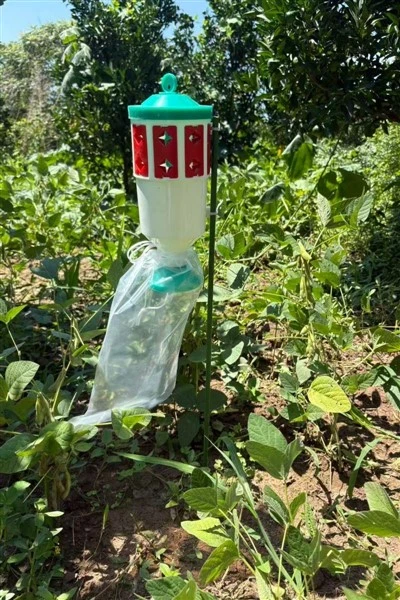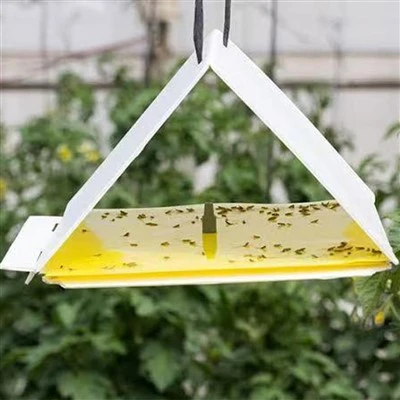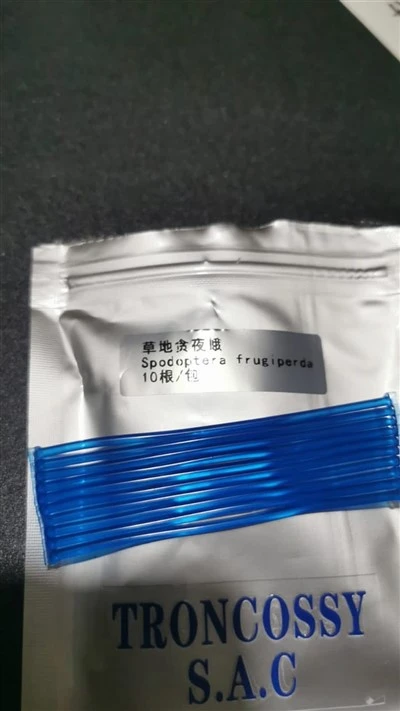

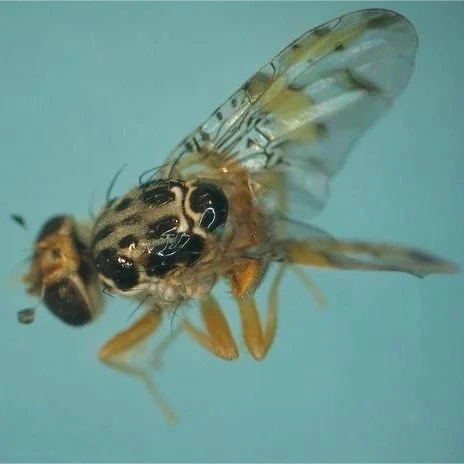
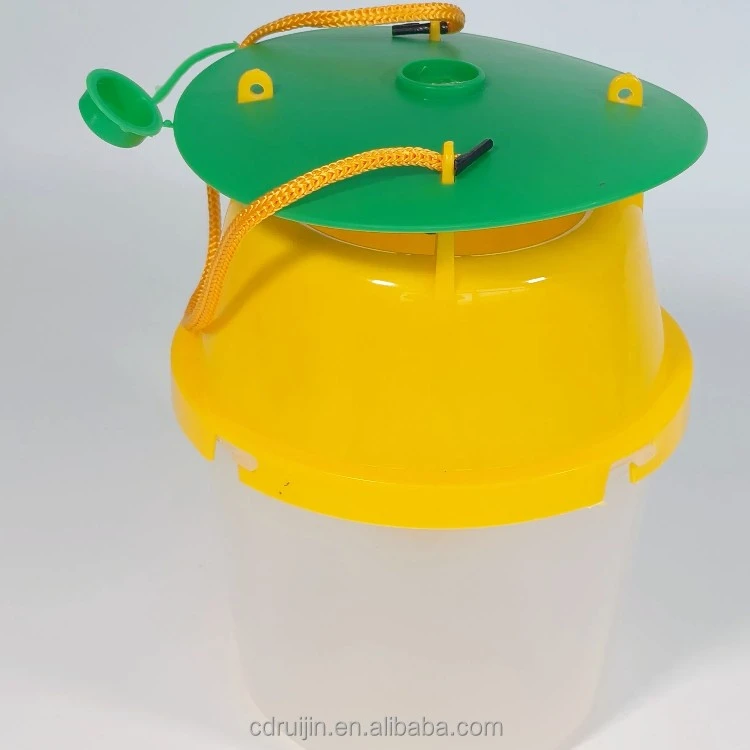
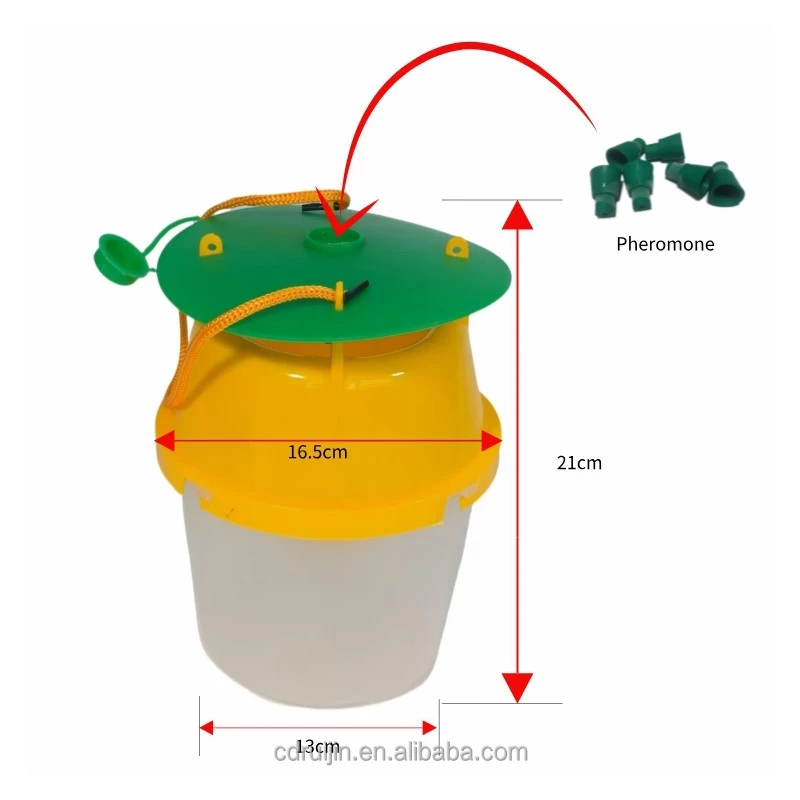
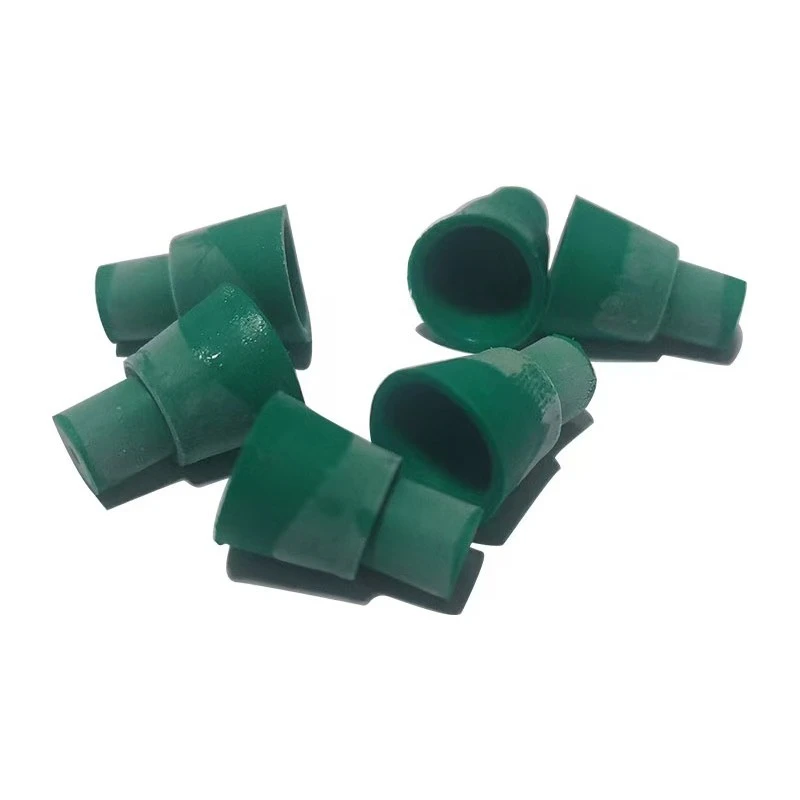
The Mediterranean Fruit Fly Pheromone Trap is a targeted pest management tool used to detect, monitor, and mass-trap Ceratitis capitata in citrus, stone fruit, and pome orchards.
Product Specifications
|
Specification |
Details |
|
Target Pest |
Mediterranean Fruit Fly (Ceratitis capitata) |
|
Target Specificity |
Up to 98% target specificity |
|
Attraction Radius |
Up to 100 m in orchard conditions |
|
Lure Life |
Up to 56 days in the field |
|
Shelf Life |
24 months at 4°C (sealed) |
|
Release Rate |
Approx. 25 mg/day |
|
Lure Options |
Standard Trimedlure or 3-component lure |
|
Catch Efficiency |
22% higher than standard liquid-bait traps |
|
Traceability |
Individual batch number for each lure |
Crop Applications
Citrus Population Monitoring: Standard calibration of 2 to 4 traps per hectare for early infestation alerts in orange, mandarin, and grapefruit orchards.
Stone Fruit Protection: Optimized for peaches, nectarines, and apricots. Placing traps in the upper one-third of the tree canopy targets the primary mating zone.
Mass Trapping Scale-Up: Increase deployment density to 20–50 traps per hectare when dynamic monitoring data exceeds 0.5 flies/trap/day.
Perimeter Buffer Interception: Deploy linear grid arrays along orchard boundaries adjacent to wild scrublands to intercept incoming migrations before crop crossover.
OEM & Private Label Support
Custom Branding & Private Label: Factory-direct printing of distributor logos, localized tracking grids.
Custom Color: Plastic masterbatch formulations can be matched within ±5 nm wavelength tolerances to meet national agricultural ministry color specifications.
Custom Pheromone Formulations: Scalable production supports customized Trimedlure loading levels and regional multi-component isomer blends for different target markets.
Rapid Prototype Development: Multi-axis CNC machining and SLS 3D printing provide production-grade prototypes for field testing within 7 working days after CAD approval.
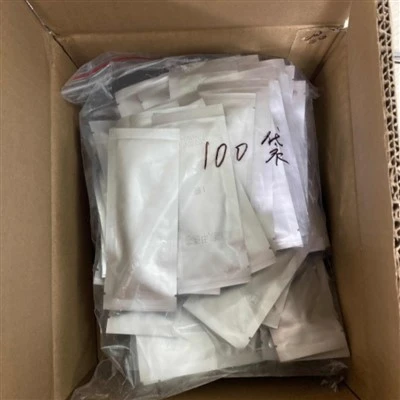
Custom Packaging Kits: Flexible packaging options combine 1 trap, 3 specialized lures, and 3 adhesive inserts into grower-ready polybags with custom GS1 barcodes, labels, and branding for direct market distribution.
Commercial Terms
MOQ: 5,000 units for standard yellow/white Delta and McPhail polymer housings; 10,000 units for synthetic pheromone lures.
Payment Terms: 30% T/T deposit upon order execution; 70% balance payable against original Bill of Lading (B/L) copies.
Export Packing: Double-wall BC-flute corrugated cartons with internal silica desiccants. Holds 10,000 Delta traps per standard 1200 × 800 mm Euro-pallet (Gross Weight: 420 kg).
Cold-Chain Logistics: Orders exceeding 50,000 lures are shipped via refrigerated containers maintained at a constant 4°C, with active USB temperature data loggers.
Lead Time: 21-day factory dispatch for 20 ft FCL orders upon deposit.
Certifications & Compliance
ISO 9001:2015 Manufacturing: Annual SGS-audited synthesis and assembly processes ensuring full batch traceability.
EPPO Protocol Alignment: Trap geometry and attraction zones comply with EPPO PM 9/21 field data logging standards.
EU REACh Verification: Material Safety Data Sheets (MSDS) confirm compliance with SVHC non-inclusion requirements under EC Regulation 1907/2006.
USDA-APHIS Compliance: Trap dimensions, polymer density, and pheromone release profiles align with the USDA Mediterranean Fruit Fly Action Plan.
Cleanroom Synthesis: Lure compounding, dosing, and sealing are completed in an ISO Class 7 cleanroom to minimize contamination and ensure product consistency.
FAQ
Hot Tags: mediterranean fruit fly pheromone traps, China mediterranean fruit fly pheromone traps manufacturers, Beet Armyworm Pheromone Trap, Golden Apple Snail Bait, Mediterranean Fruit Fly Pheromone Traps, Red Palm Weevil Pheromone Traps, Whitefly Lure Bemisia Tabaci Gennadius Pheromone Traps, Whitefly Lure Trialeurodes Vaporariorum Insect Pheromone Traps