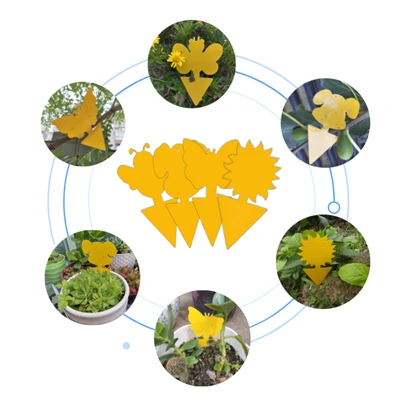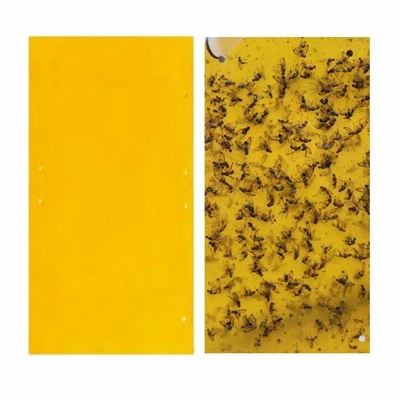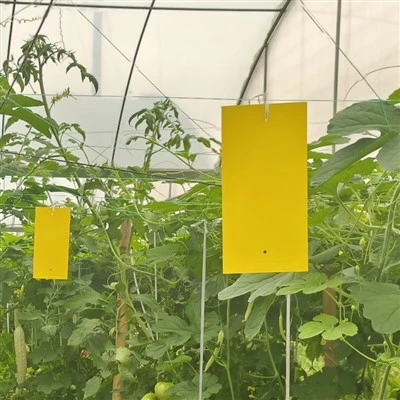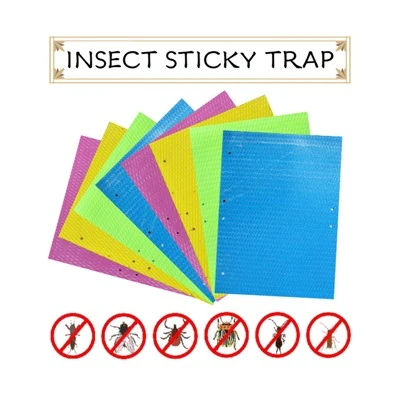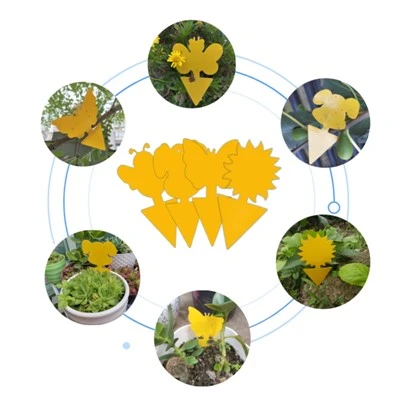
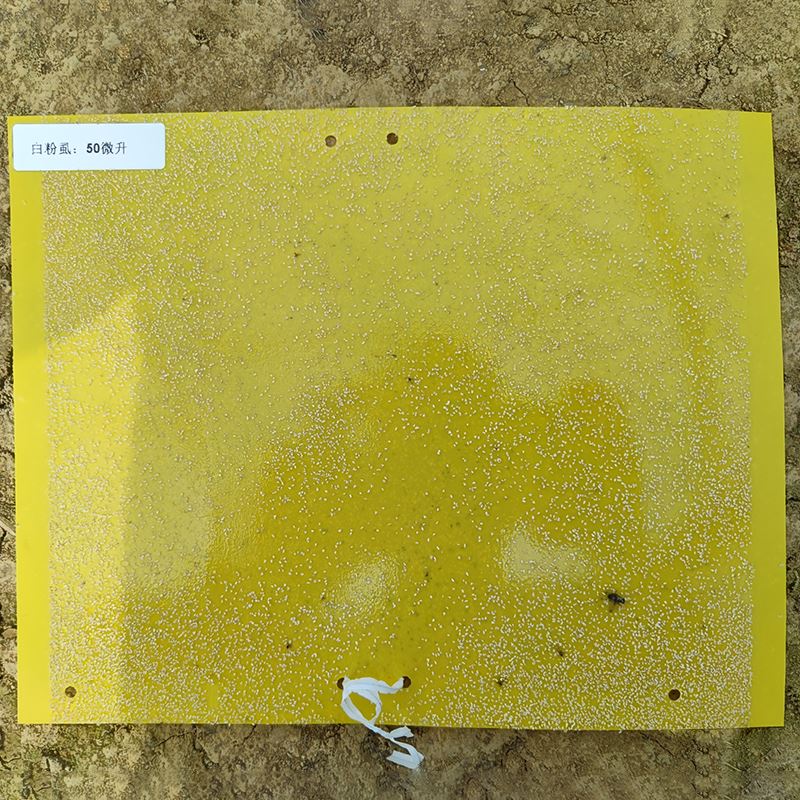
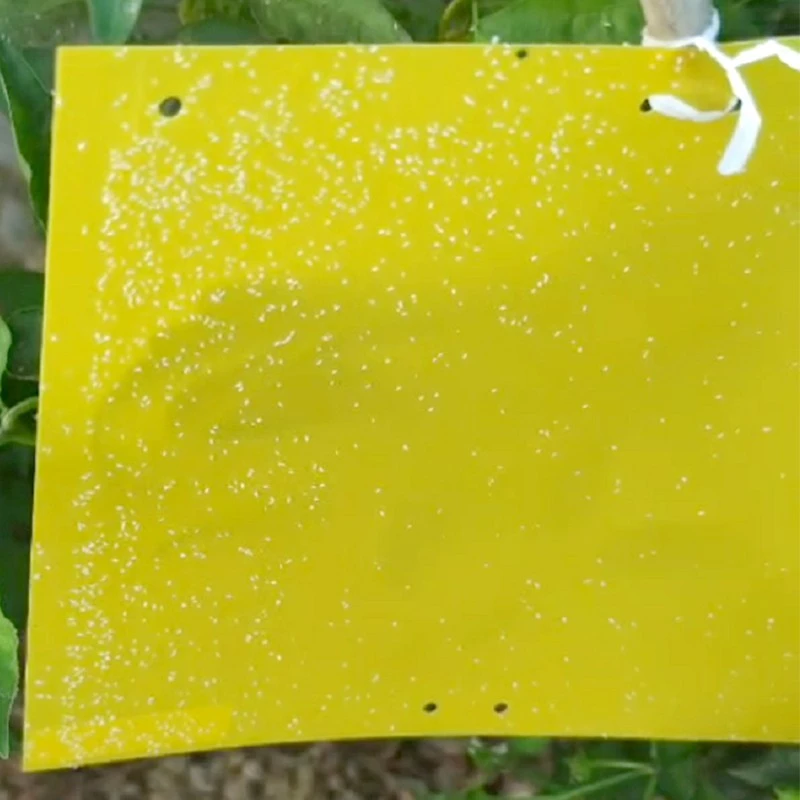
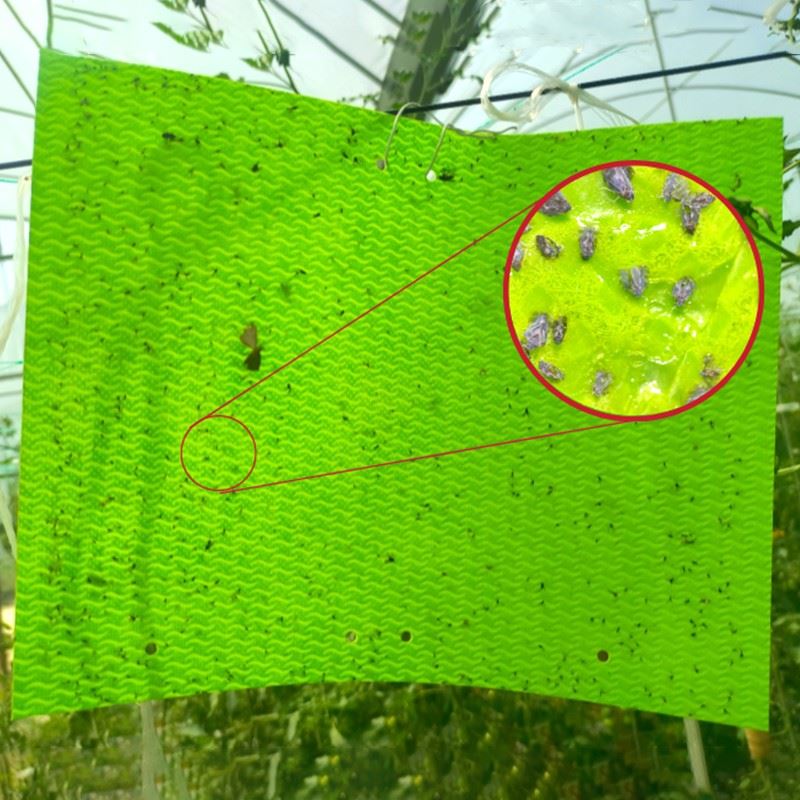
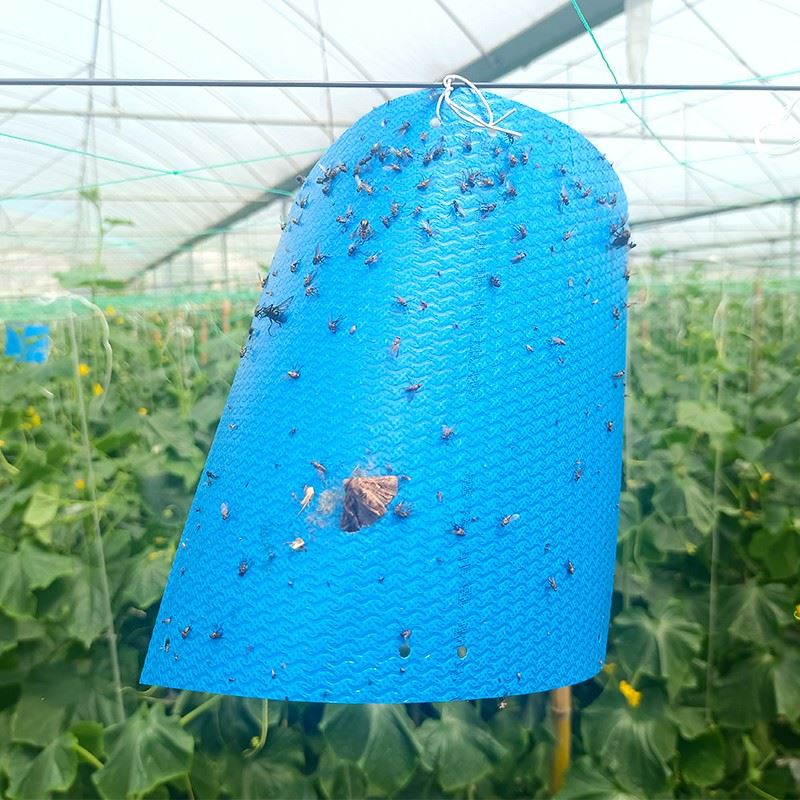
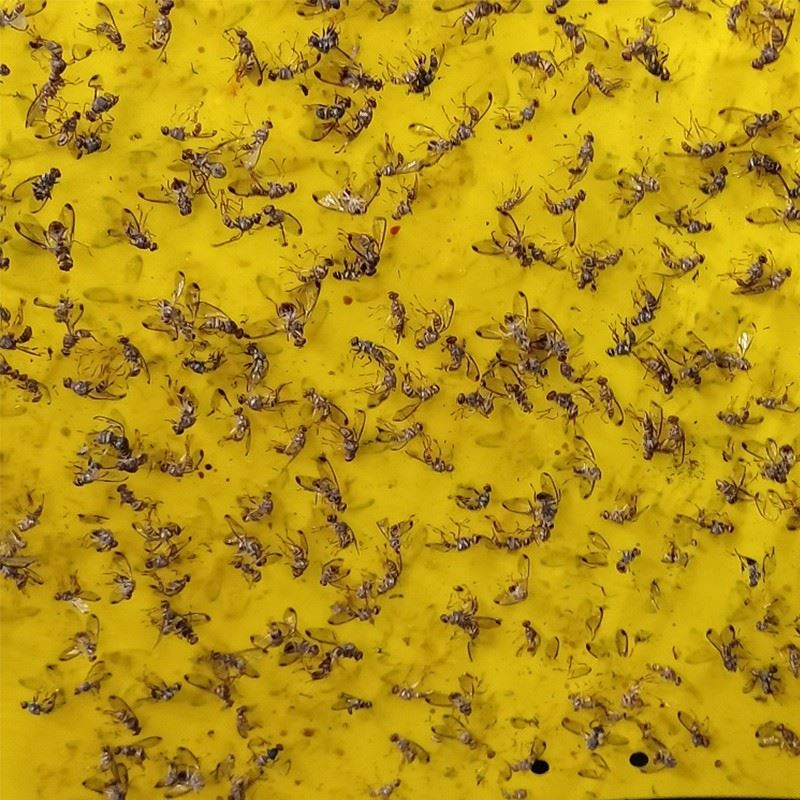
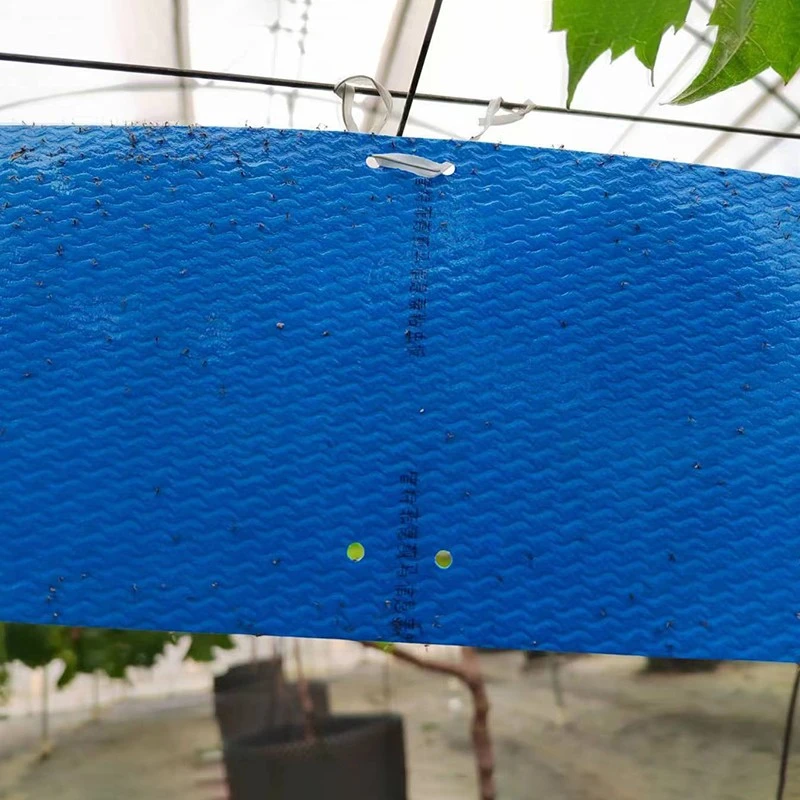
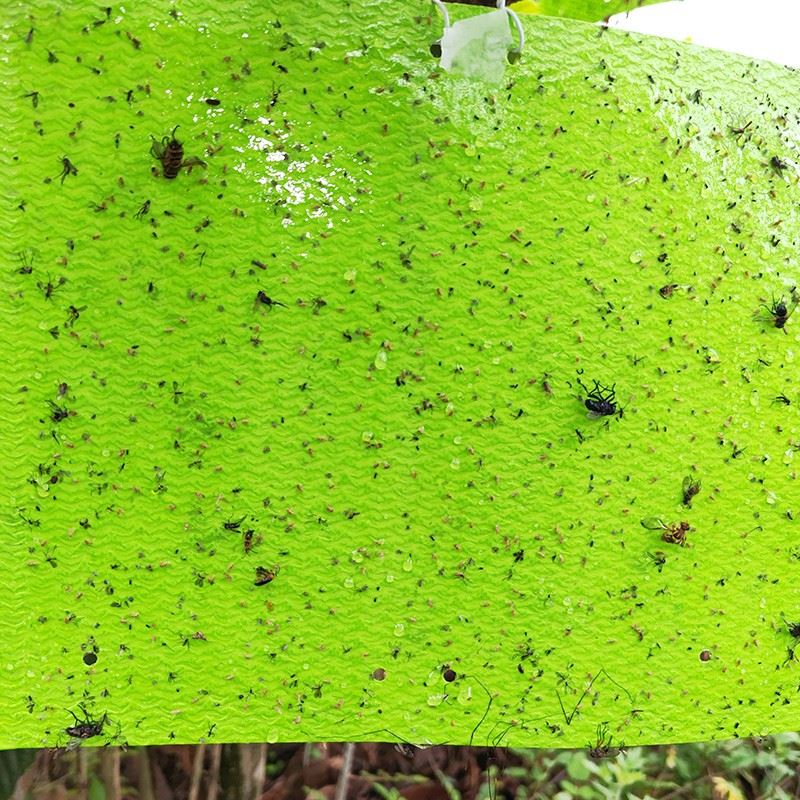
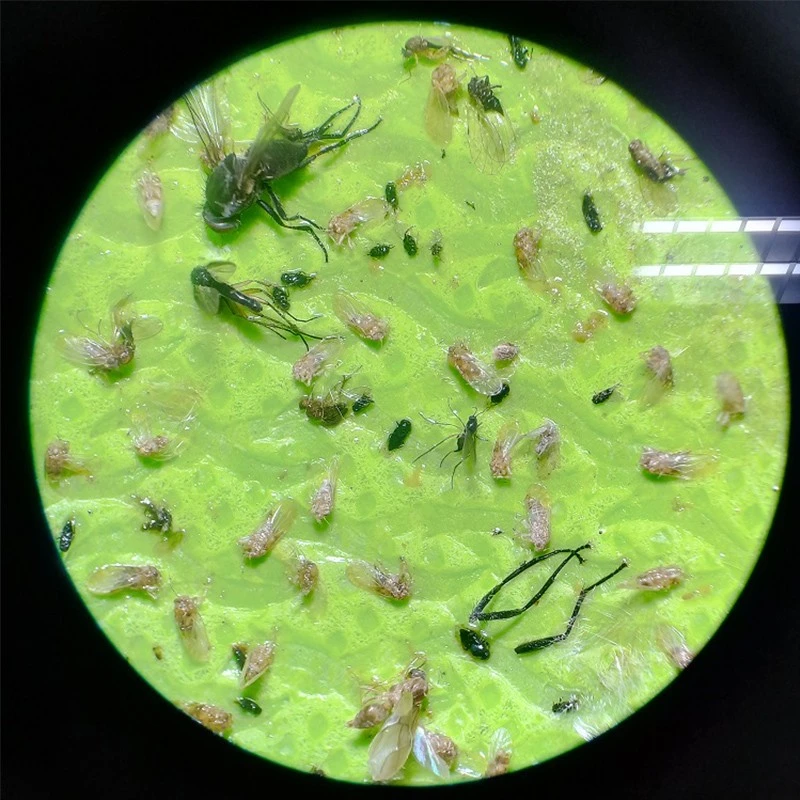
The Insect Sticky Trap and Pheromone Matrix is an integrated pest monitoring and mass-trapping system designed to intercept, attract, and immobilize target agricultural and horticultural pests.
Technical Specifications
|
Specification |
Details |
|
Base Material |
350 gsm virgin cardboard or 400 μm UV-stabilized PP |
|
Standard Sizes |
10 × 25 cm, 20 × 40 cm, ±0.5 mm tolerance |
|
Adhesive Coating |
40 g/m² uniform adhesive coating |
|
Monitoring Grid |
1 × 1 cm printed counting grid |
|
Pheromone Packaging |
100 μm foil pouch, OTR <0.1 cc/m²/day |
|
Mounting |
6 mm reinforced hanging hole |
|
Thrips Control |
42% population reduction in 6-week field trial |
|
Early Detection |
Detects pests 5–7 days earlier than visual inspection |
|
Adhesive Retention |
92% retention after 40 days of field exposure |
Targeted Applications
Target Species: Physical trap dimensions calibrated for high-precision capture of Frankliniella occidentalis (Western Flower Thrips), Bemisia tabaci (Whiteflies), Leafminers, and Fungus Gnats.
Phototaxis Wavebands: Yellow base boards set to 580 nm for whitefly attraction; blue base boards set to 470 nm to optimize thrips capture based on pest phototaxis data.
Controlled Pheromone Release: Rubber septum matrix provides a linear volatilization rate of 1.5 mg/day, maintaining active pest attraction throughout a 45-day crop cycle.
Key Features
Thermal Stability: Hot-melt adhesive formulation maintains structural integrity without running, melting, or dripping under extreme temperatures ranging from -5°C to 50°C.
Moisture & Irrigation Resistance: Hydrophobic properties prevent adhesive wash-off and maintain tackiness during overhead sprinkler irrigation and heavy rainfall.
UV Degradation Resistance: Formulated with Hindered Amine Light Stabilizers (HALS) to prevent adhesive hardening or skinning during 60 days of continuous direct sunlight exposure, reducing field replacement frequency.
Wind Shear Retention: Validated adhesive shear strength retains target insects up to 0.5 g during wind gusts up to 35 km/h.
Supply Chain Capacity
Monthly Output: Factory capacity of 5,000,000 trap units per month, ensuring a stable supply for high-volume commercial contracts.
MOQ & Customization Options: Unbranded stock available from 10,000 units; custom sizes, grid layouts, and private label OEM printing start at 50,000 units.
Pheromone Cold-Chain Logistics: Optional climate-controlled reefer shipping at 2°C–8°C to preserve pheromone stability and shelf life during transoceanic transit.
Lead Time: Standard 20 ft and 40 ft HQ container orders are dispatched within 21 days after final artwork approval and deposit confirmation.
Port Clearance Compliance: Export packaging uses non-wood or ISPM 15 heat-treated materials to support smooth customs clearance in North American and European markets.
Compliance
REACH & RoHS Compliant: Formulated using bio-inert polyisobutylene polymers; all raw plastics and chemical formulas comply with EU REACH and RoHS standards, verified by independent third-party laboratory reports.
ISO 9001:2015 Traceability: Manufactured under ISO 9001:2015 quality protocols with full lot-number traceability from raw polymer production to finished pallets.
Documentary Transparency: Every shipment includes a Certificate of Analysis (CoA) verifying adhesive coating weight (g/m²) and pheromone release performance.


FAQ
Hot Tags: insect sticky trap and pheromone, China insect sticky trap and pheromone manufacturers, Biodegradable Insect Sticky Trap, Double Sides Insect Sticky Trap, Fruit Fly Trap Ball, Insect Sticky Trap Board, Waterproof Sticky Pest Sheet, Yellow Plastic Sticky Board Trap for Insects