Introduction
In the continuous battle against agricultural pests, indoor garden invaders, and household insects, the tools we choose dictate the sustainability of our success. While chemical interventions have historically dominated the landscape, the modern shift toward sustainable cultivation and safety has brought traditional, physical pest control methods back into the spotlight. Among these, the sticky trap stands out as one of the most elegant, cost-effective, and indispensable tools available to growers, researchers, and homeowners alike.
But what is a sticky trap, and why does it remain a cornerstone of Integrated Pest Management (IPM) programs worldwide? At its core, it is a non-toxic, adhesive-coated device designed to capture and monitor flying or crawling insects. Far from being a simple piece of colored cardboard, a modern sticky trap is a scientifically engineered asset that utilizes insect behavior, visual spectrums, and advanced polymer chemistry to protect crops and living spaces. Understanding the mechanics, variations, and strategic deployment of these traps is essential for anyone looking to maintain a healthy, pest-free environment without relying solely on synthetic chemical sprays.
The Anatomy and Science Behind the Sticky Trap
To appreciate the efficacy of a sticky trap, one must first look at the science governing its design. Unlike chemical pesticides that disrupt an insect's nervous or metabolic systems, these traps rely purely on physical immobilization. When an insect lands on or crawls across the treated surface, the adhesive bonds instantly with its tarsi (feet) or wings, preventing escape. This mechanical action means insects can never develop a biological resistance to it-a massive advantage over chemical alternatives.
The true genius of the device, however, lies in its use of visual stimuli. Insects do not see the world the way humans do; they are highly sensitive to specific wavelengths of light. Manufacturers color-code these traps to mimic the exact visual cues that pests associate with healthy host plants or mating environments. For instance, specific shades of yellow replicate the peak reflectance of vigorous, young foliage, drawing in vegetarian insects looking for a place to feed and lay eggs.
Behind the color is the adhesive technology. High-quality traps use specialized, pressure-sensitive, non-drying glues made from polybutene or similar synthetic polymers. These adhesives are engineered to withstand extreme environmental conditions. Whether exposed to the blistering heat of a commercial greenhouse, the high humidity of a hydroponic grow room, or the overhead irrigation of an open field, the glue remains tacky, UV-stable, and highly effective for months without running or drying out. Furthermore, because these adhesives are typically non-toxic and odor-free, they present no chemical hazards to handlers or consumers of the final harvest.
Major Types of Sticky Traps and Their Target Pests
Not all insects respond to the same stimuli, which has led to the development of specialized variations tailored to specific pest profiles. Selecting the right sticky trap depends entirely on the target pest causing issues within a specific microclimate.
Yellow Sticky Traps
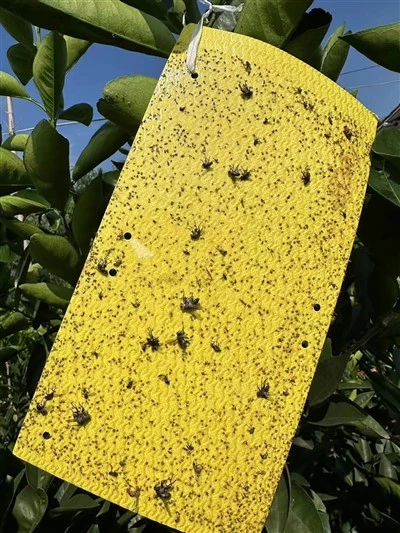
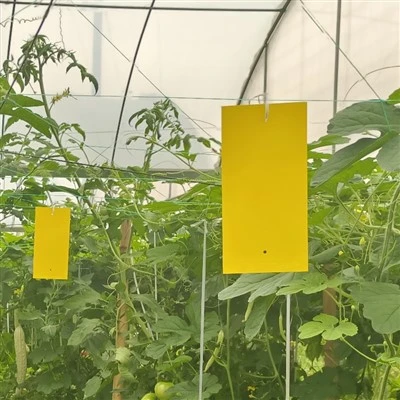
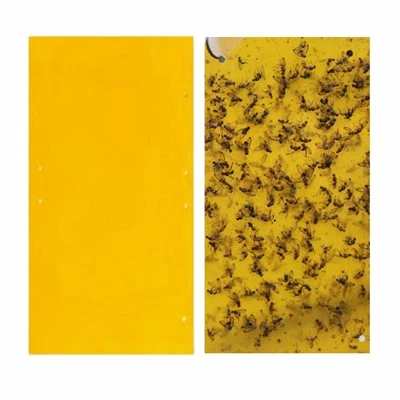
The yellow variant is the undisputed industry standard and the most widely used configuration globally. This specific wavelength of yellow acts as a universal attractant for a broad spectrum of small, flying pests. It is exceptionally effective against fungus gnats, whiteflies, aphids, shore flies, leafminers, and winged thrips. For indoor growers dealing with soil-born fungus gnats, a few yellow cards placed near the base of the soil can decimate the adult population rapidly, breaking the breeding cycle.
Blue Sticky Traps
While yellow traps attract a wide variety of insects, they sometimes fall short against specific, highly destructive pests like western flower thrips. Thrips possess a distinct visual preference for the blue spectrum. Blue traps are engineered precisely to exploit this preference. By deploying blue variations in crops highly susceptible to thrips-such as strawberries, cucumbers, and ornamental flowers-growers can target these elusive pests while minimizing the accidental capture of other non-targeted species.
Physical Variations and Forms
Beyond color, these tools are manufactured in diverse form factors to suit different environments:
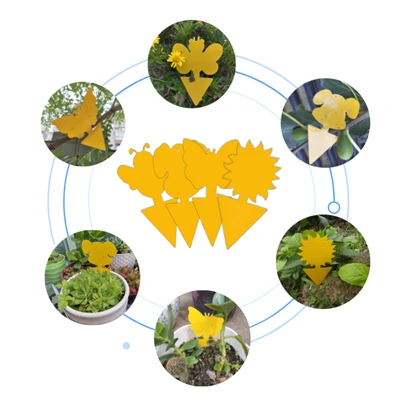
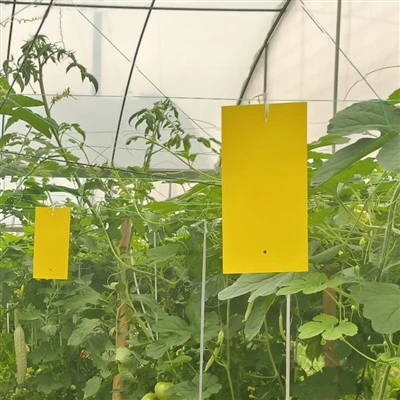
Card and Sheet Traps: Standard rectangular cards, often pre-perforated or equipped with grid lines for easy counting during monitoring.
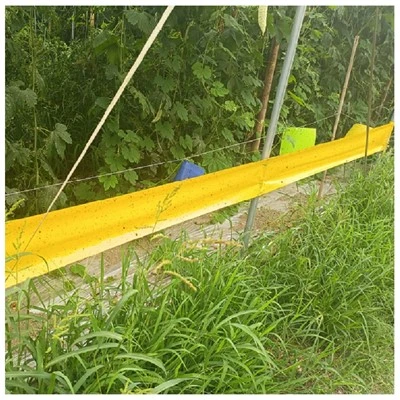
Roller Tapes and Ribbons: Long, continuous rolls of adhesive plastic that can be strung along the lengths of greenhouse structures or wrapped around tree trunks to intercept crawling insects like ants, caterpillars, or weevils.
Delta and Box Traps: Often incorporating a sticky insert combined with a pheromone lure to attract specific species like moths or beetles.
Strategic Deployment and Best Practices in Agriculture and Horticulture
Simply hanging a sticky trap in a room or greenhouse is not enough to achieve optimal pest management. Maximizing its utility requires strategic placement, correct density, and an understanding of insect flight patterns.
Monitoring vs. Mass Trapping
Before deployment, a grower must define the objective: is the goal monitoring or mass trapping? Monitoring involves using a low density of traps to act as an early-warning radar system. By inspecting cards weekly, growers can identify the exact moment a pest population emerges, allowing for precise, localized interventions before an infestation explodes. Mass trapping, on the other choosing, uses a much higher density of cards intended to actively suppress and reduce large insect populations.
Placement and Height
Insect behavior dictates trap height. Most flying pests, such as whiteflies and aphids, are relatively weak fliers that hover just around or slightly above the plant canopy. Therefore, traps should be positioned so that the bottom of the card hangs just above the topmost leaves of the plant. As the crop grows, the height of the card must be adjusted accordingly. For soil-dwelling pests like fungus gnats, the traps should be placed horizontally or vertically right at the soil surface or pot rim.
Density Guidelines
For a basic monitoring protocol in a greenhouse or indoor grow room, a standard baseline is to place one card per fifty to one hundred square meters. However, if the objective shifts to mass trapping during an active outbreak, that density should be significantly increased to one card per two to five square meters, or placed directly between every few plants in high-risk zones.
Maintenance and Replacement Cycles
A trap covered in dust, debris, or dead insects loses its efficacy. The accumulated bodies of captured pests hide the attractive colored backing and reduce the available sticky surface area. As a rule of thumb, traps should be replaced when approximately half of the sticky surface is covered, or every six to eight weeks regardless of catch volume, as environmental dust will eventually degrade the adhesive's tackiness.
The Benefits and Limitations in Integrated Pest Management (IPM)
Integrating the sticky trap into a broader IPM framework offers profound advantages, but it is equally vital to understand its inherent limitations to avoid a false sense of security.
Advantages
The primary benefit of this tool is its role as an eco-friendly diagnostic device. It provides real-time, empirical data on what pests are present and in what quantities, eliminating guesswork and preventing the unnecessary, prophylactic application of chemical pesticides. This saves money, protects the environment, and prevents chemical residue on food crops. Additionally, because they are mechanical, they work twenty-four hours a day, catching nocturnal pests that growers might never see during daylight hours.
Limitations and Challenges
Despite their brilliance, these devices are completely non-selective within their color spectrums. A yellow trap does not differentiate between a destructive aphid and a beneficial parasitic wasp or lacewing. If beneficial insects are released into a greenhouse as a biological control measure, high densities of sticky cards can inadvertently disrupt the biological program by trapping the very allies the grower paid to introduce. Furthermore, they are ineffective against non-flying, non-crawling life stages, such as insect eggs or pupae buried deep within plant tissue or substrate.
Achieving Synergy
To overcome these limitations, advanced growers use a synchronized approach. They might use traps heavily early in the season for monitoring and knocking down initial pest populations. Once beneficial insects are introduced, the cards may be temporarily removed or raised higher above the canopy to give the biological predators room to hunt without getting stuck.
Conclusion
The humble sticky trap remains one of the most powerful, sustainable, and reliable tools in modern pest management. By bridging the gap between basic insect biology and practical, non-toxic engineering, it empowers growers and homeowners to take control of their environments proactively rather than reactively. Whether used as an early-warning detection system to intercept a budding thrips infestation or deployed en masse to break the life cycle of fungus gnats, its value to agriculture, horticulture, and domestic hygiene is undeniable.
Looking forward, the evolution of this tool is entering an exciting digital frontier. Modern agricultural technology is now integrating these physical traps with high-resolution cameras and artificial intelligence algorithms. These smart systems automatically photograph the traps daily, use machine learning to identify and count specific insect species, and send instant alerts to a grower's smartphone when pest thresholds are crossed. Yet, even as artificial intelligence takes over the analysis, the core mechanism remains unchanged: a simple, perfectly colored, incredibly sticky surface doing the vital work of physical pest containment. Embracing this tool fully is an essential step toward a cleaner, greener, and more sustainable future for global cultivation.