Introduction
Modern agriculture stands at a critical crossroads. For decades, the global food supply chain relied heavily on synthetic chemical pesticides to secure crop yields and suppress destructive insect populations. However, the unintended consequences of this over-reliance-including accelerating pest resistance, catastrophic biodiversity loss among beneficial pollinators, and stringent regulatory crackdowns on chemical residues-have forced a paradigm shift. Today, sustainable agriculture relies on Integrated Pest Management (IPM), a holistic approach that prioritizes biological, cultural, and ecological mechanisms over chemical intervention. At the vanguard of this ecological revolution are semiochemicals, specifically pheromone lures.
Pheromones are naturally occurring volatile chemical compounds emitted by insects to communicate with members of their own species. By isolating, synthesizing, and deploying these chemical messages in agricultural environments, scientists and growers can influence, manipulate, or disrupt pest behavior with surgical precision. Unlike broad-spectrum chemical insecticides that indiscriminately eradicate insect populations, pheromone lures are highly species-specific. They leave beneficial predators, honeybees, and the surrounding ecosystem entirely unharmed. As the agricultural sector faces intensifying pressure to produce more food with fewer chemical inputs, understanding the diverse types of pheromone lures available, their underlying biological mechanisms, and their delivery technologies has become paramount for agronomists, crop consultants, and progressive growers worldwide.
Sex Pheromone Lures: The Foundation of Target-Specific Monitoring
Among the various semiochemical tools deployed in crop protection, sex pheromone lures are the most widely recognized and extensively utilized. In nature, female insects frequently release highly volatile chemical bouquets-often complex mixtures of long-chain fatty acid derivatives like alcohols, aldehydes, or acetates-to attract conspecific males across vast distances for mating. Synthetically replicating these precise chemical ratios allows manufacturers to create highly targeted sex pheromone lures that exploit this fundamental reproductive drive.
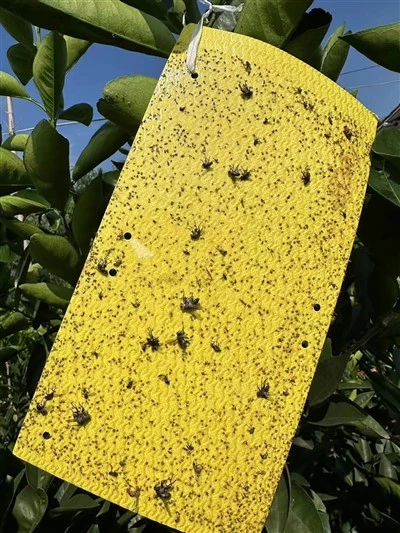
The primary operational application of sex pheromone lures lies in pest monitoring and population dynamics tracking. When placed inside specifically designed physical traps (such as delta, wing, or funnel traps), these lures attract and capture searching male insects. By conducting regular trap counts, crop advisors can establish a clear baseline of pest pressure within a specific orchard, vineyard, or open field. This data is foundational for determining the "bio-fix"-the biological turning point indicating the initiation of sustained pest flight and reproductive activity. Furthermore, monitoring data generated by these lures allows growers to calculate economic injury thresholds, ensuring that if curative interventions like biological sprays or targeted chemicals are required, they are applied precisely when the pest population poses a genuine economic threat, rather than on an arbitrary calendar schedule.
The efficacy of sex pheromone lures is heavily demonstrated in the management of Lepidopteran species, which represent some of the most economically devastating pests globally. A classic example is the Codling Moth (Cydia pomonella), the primary pest of apples and pears worldwide. The deployment of synthetic codling moth sex pheromones has revolutionized pome fruit production, dropping chemical insecticide applications dramatically. Similarly, sex pheromone lures targeting the Fall Armyworm (Spodoptera frugiperda) are heavily utilized across the Americas, Africa, and Asia to monitor and intercept devastating invasions in maize crops before the larvae can cause irreversible defoliation. By isolating the specific reproductive signals of these moths, growers gain an invisible, highly accurate intelligence network across their fields.
Aggregation Pheromone Lures: Managing Mass Infestations
While sex pheromones predominantly influence male behavior, aggregation pheromones operate under a different biological imperative. These chemical signals are emitted by insects of either sex and serve to attract individuals of both sexes, resulting in a rapid, dense concentration of the pest population within a specific localized area. In nature, insects utilize aggregation pheromones to achieve a variety of ecological objectives, such as overwhelming a host plant's natural defense mechanisms, exploiting a localized food resource, or maximizing mating success within a concentrated group.
Because aggregation pheromone lures attract both males and females, they open up distinct strategic possibilities for crop protection that go beyond simple population monitoring. The most notable of these strategies is mass trapping. By deploying a high density of robust traps equipped with powerful aggregation lures around the perimeter or within a vulnerable crop zone, growers can physically intercept and eliminate massive numbers of adult pests before they have the opportunity to reproduce or inflict feeding damage. This mass trapping technique essentially utilizes the pests' own social and survival instincts against them, drawing them away from the commercial crop and into containment systems.
Aggregation pheromone lures are particularly indispensable when dealing with Coleopteran (beetles) and Hemipteran (true bugs) species, which frequently exhibit highly destructive collective feeding behaviors. A premier example is the management of the Red Palm Weevil (Rhynchophorus ferrugineus), a devastating pest of palm trees globally. Standard sex pheromones are largely ineffective for this species, but aggregation lures, combined with fermenting plant material, allow plantation managers to capture thousands of adult weevils of both sexes, successfully preserving fragile palm ecosystems. Similarly, aggregation lures are heavily deployed to track and mitigate the spread of the Brown Marmorated Stink Bug (Halyomorpha halys), an invasive threat to high-value specialty crops, stone fruits, and vegetables. By capturing both sexes, these lures prevent the rapid flocking behavior that typically results in catastrophic cosmetic damage to ripening fruit.
Kairomone and Food-Attractant Co-Lures: Enhancing Lure Synergy
While pure pheromone lures leverage intraspecific communication (signals between individuals of the same species), modern agricultural science has increasingly turned its attention to interspecific chemical communication to optimize trap performance. This brings us to kairomones and host-plant volatiles. Kairomones are chemical substances emitted by an organism-such as a ripening fruit or a stressed leaf-that mediate an interaction that benefits the receiving species (the pest) but harms the emitting organism (the plant). When insects seek out food or an optimal site to lay their eggs, they track these complex botanical scents.
The true innovation in modern pest management occurs when synthetic kairomones or food-attractants are combined directly with standard pheromone formulations to create "co-lures." This combination creates a potent synergistic effect. To an insect, the simultaneous scent of a potential mate (the pheromone) and an ideal feeding or egg-laying location (the kairomone) indicates a highly lucrative environment. The behavioral response to a combined pheromone-kairomone lure is frequently exponentially greater than the response to either chemical signal used in isolation. This allows for significantly higher capture rates, a broader detection window, and the ability to attract pests even when natural pest populations are exceptionally low.
A profound practical benefit of these advanced co-lures is their ability to attract and capture mated female insects. Traditional sex pheromone lures capture only males, which means that even if a trap captures numerous insects, fertilized females may still be actively laying hundreds of eggs throughout the crop. By integrating host-plant volatiles that mimic the precise ripening stage of a crop, co-lures entice females searching for an oviposition site. For instance, in walnut and apple orchards, combining the standard codling moth sex pheromone with a pear ester kairomone has allowed growers to monitor both male and female flights simultaneously. This provides a vastly more accurate picture of potential larval damage and allows for unprecedented precision when timing biological control applications.
Dispenser Technologies: How Delivery Mechanisms Dictate Field Efficacy
The chemical sophistication of a pheromone blend means very little if the physical medium used to deploy it in the field fails to perform. Synthetic pheromones are highly volatile, organic compounds that are incredibly sensitive to environmental degradation. When exposed to the elements, factors such as intense solar ultraviolet (UV) radiation, fluctuating ambient temperatures, high humidity, and heavy rainfall can rapidly break down the chemical bonds of the pheromone, causing it to lose its potency or evaporate far too quickly. Therefore, the development of advanced dispenser technologies is just as critical to crop protection as the synthesis of the pheromone molecules themselves.
The fundamental objective of any dispenser is to maintain a zero-order or near-zero-order release rate. This means the dispenser must release a steady, predictable, and continuous stream of the pheromone compound over an extended period, regardless of whether it is a scorching midday afternoon or a cool, damp night. Traditional, cost-effective dispensers include rubber septa and polyethylene tubes or vials. Rubber septa absorb the liquid pheromone blend into their elastomeric matrix, allowing the molecules to slowly migrate to the surface and volatilize. These are highly popular for standard monitoring applications, typically requiring replacement every four to six weeks. Polyethylene tubes, often referred to as "rope" dispensers, hold a reservoir of the chemical and release it through the semi-permeable plastic walls, making them excellent choices for long-term season-growth applications like mating disruption.
In recent years, the industry has witnessed remarkable advancements in delivery engineering. Microencapsulated flowable formulations now allow pheromones to be applied directly via standard agricultural sprayers. In these systems, the pheromone is encased in microscopic polymer shells that adhere to the crop foliage, slowly outgassing the active semiochemical over several weeks to disrupt mating patterns across an entire field.
Furthermore, the rise of precision agriculture has facilitated the adoption of automated, smart aerosol emitters. These battery-powered, weather-resistant units are hung high within tree canopies or field perimeters and are programmed via microprocessors to release precise puffs of pheromone only during the exact hours of the day when the target pest is behaviorally active. By shutting down release during the daytime or during adverse weather conditions, these smart systems dramatically conserve pheromone material, extend the operational lifespan of the lure, and significantly reduce the labor costs associated with manually replacing traditional passive dispensers.
Conclusion
The integration of pheromone lures into global crop protection represents a significant milestone in our journey toward truly sustainable, ecologically balanced agriculture. By shifting away from the blunt-force trauma of broad-spectrum chemical eradication and embracing the nuanced, species-specific language of semiochemical communication, modern farming can successfully safeguard food security while actively preserving environmental health. As explored, the diverse categories of lures-ranging from highly targeted sex pheromones for precise population monitoring, to robust aggregation pheromones designed for high-volume mass trapping, to advanced kairomone co-lures that exploit multi-sensory insect behaviors-each fulfill a vital, complementary role within modern Integrated Pest Management frameworks.
Looking forward, the future of pheromone technology is bright, driven by continuous innovation across multiple scientific disciplines. As climate change shifts historical weather patterns and alters the geographical distribution of invasive agricultural pests, the demand for highly adaptive, rapid-response monitoring tools will only intensify. The next generation of semiochemical solutions will likely feature the deeper integration of digital technologies, such as automated camera-equipped traps that utilize artificial intelligence to identify and count pheromone-attracted pests in real-time, instantly transmitting data to cloud-based farm management software.
Furthermore, advancements in green chemistry and biosynthetic production methods promise to reduce the manufacturing costs of complex pheromone molecules, making these eco-friendly tools economically accessible for large-scale row crops and smallholder farmers alike. By continuing to invest in, understand, and refine these diverse pheromone lure systems, the agricultural industry can build a resilient, productive, and truly sustainable food production ecosystem for generations to come.